Cabergoline 0.5mg at a glance
Cabergoline 0.5 mg is the standard tablet strength used to lower prolactin. It contains the dopamine agonist cabergoline, and it is sold under brand names such as Dostinex as well as in generic form.
Prolactin is the hormone that triggers milk production after childbirth. When it stays high outside pregnancy, the result can be missed periods, trouble conceiving, unexpected milk-like discharge, low desire or erectile problems in men. Cabergoline brings the level back down.
This guide covers what the 0.5 mg tablet is used for, how weekly dosing is built around it, what it should not be combined with, and the safety checks that come first.
Many people reach it after a blood test shows raised prolactin, and a benign pituitary tumour overview explains one of the most common causes in clear terms.
| Detail | What to know |
|---|
| Active ingredient | Cabergoline |
| Strength | 0.5 mg per tablet |
| Class | Dopamine D2 receptor agonist |
| Usual schedule | Once or twice a week |
| Typical brand reference | Dostinex |
| Supply | Prescription medicine |
What the 0.5 mg tablet is used for
Raised prolactin and pituitary tumours
The main purpose is treating hyperprolactinaemia, including prolactin-secreting adenomas. Treatment often shrinks these growths and settles the symptoms they cause. For a fuller picture, see our page on high prolactin levels.
Effects on sex hormones
Excess prolactin suppresses the hormones that drive the reproductive system. In women this can mean irregular cycles and low desire. In men it can lower testosterone and cause erectile difficulty, a link we describe in men's hormone health.
Stopping breast milk
Cabergoline can be prescribed to stop lactation when there is a medical reason, for example after a stillbirth or when breastfeeding is not possible.
Parkinson's disease
At much higher doses than the 0.5 mg strength is built for, cabergoline has been used as add-on therapy in Parkinson's disease. That is a specialist decision and is less common today.
Off-label use in bodybuilding
Some bodybuilders take cabergoline to counter prolactin rises linked to anabolic steroid use. That is not an approved use, and steroids themselves carry serious risks. Our article on cabergoline in bodybuilding weighs this honestly, and a doctor should be consulted before anyone considers it.
How the medicine works
Normally, dopamine released in the brain keeps prolactin production low. Cabergoline copies that signal at D2 receptors in the pituitary gland.
As those receptors switch on, the prolactin-making cells quieten and blood levels fall. The drug lingers in the body for several days, so a weekly schedule is enough.
Dosage built around the 0.5 mg tablet
Only a prescriber can set your dose, and it depends on blood prolactin, the condition being treated and other health factors. The pattern below is the general label approach.
- Starting dose: commonly 0.25 mg twice a week (half a tablet each time) or 0.5 mg once a week.
- Adjustment: increases in 0.25 to 0.5 mg steps no sooner than every four weeks, guided by repeat blood tests.
- Usual maintenance: often around 1 mg a week, spread over one or two days.
- Lactation suppression: typically a single 1 mg dose (two tablets) soon after delivery.
Men are dosed on the same principles as women, adjusted to their own blood results and symptoms. Take tablets at the same time on the same days, with water, and with food if nausea is an issue. A scored tablet may be halved only if your prescriber has told you to do so. Our dosage guide explains how step-by-step adjustment is usually handled.
If a dose is missed
Take it when you remember, unless the next dose is close. Then skip the missed one. Do not double up.
If too much is taken
Get medical advice straight away. Overdose can cause fainting, severe nausea, nasal congestion and hallucinations.
Interactions
Several medicines change how cabergoline works or add to its risks.
- Dopamine blockers such as haloperidol, phenothiazines and thioxanthenes, which can cancel its effect.
- Metoclopramide, an anti-sickness drug that opposes dopamine.
- Other ergot medicines such as bromocriptine, dihydroergotamine, methylergometrine and methysergide.
- Macrolide antibiotics including erythromycin, which may raise cabergoline levels.
- Blood pressure treatments, which can add to dizziness.
List every vitamin, supplement and herbal product too when you talk to your doctor or pharmacist.
Side effects
Cabergoline at weekly doses is usually tolerated well, and effects often ease after the first weeks. A longer list appears in our summary of side effects.
Often reported
- Nausea, vomiting, heartburn and constipation
- Tiredness and dizziness
- Headache
- Breast pain and painful periods
Call your doctor promptly
- Shortness of breath, chest pain or a persistent cough
- Swelling of the hands, feet or ankles
- Back or side pain, or passing much less urine
- Strong urges to gamble, shop, eat or have sex
- Sudden sleep attacks, confusion or hallucinations
The first group can be mentioned at your next visit if they persist. The second group needs attention sooner.
Precautions and who should not take it
Do not use cabergoline if you have uncontrolled high blood pressure, are allergic to ergot-type medicines, or have a history of fibrosis in the lungs, heart or abdomen.
Take extra care if you have:
- Heart valve disease, as discussed in heart valve risk
- Liver disease, which can raise the chance of side effects
- Raynaud's syndrome or a past stomach ulcer
- A history of psychosis or other serious mental illness
Prescribers commonly arrange a heart check before long courses and regular follow-up during them.
Pregnancy and breastfeeding
Treating high prolactin often restores ovulation, so pregnancy can happen. Tell your doctor if you are planning a pregnancy or become pregnant, as the plan for stopping or continuing the tablets needs individual advice. Cabergoline also stops milk production, so it is not used by women who want to breastfeed.
Brand and generic versions of 0.5 mg
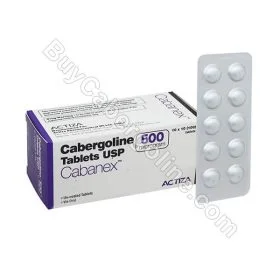
The reference brand is Dostinex, and generics contain the same active ingredient at the same strength. Equivalent listings on this site include Cabanex 0.5mg and Caberlin 0.5mg. Brand names and licensing differ between countries, so always confirm what you are taking with your pharmacist.
Buying cabergoline sensibly
Because this is a prescription medicine, a doctor's assessment should come before any purchase. Check that a seller is transparent about its prescription rules, contact details, returns and cancellation terms, and compare total cost including shipping rather than only the tablet price. Prices vary by country and pack size. A general overview of ordering is on our cabergoline for sale page.
Frequently asked questions
How should I take the 0.5 mg tablet?
Exactly as prescribed, with water, once or twice a week on fixed days. Taking it with food can reduce nausea.
Is it safe in pregnancy?
Data are limited but have not shown a clear rise in birth defects. Even so, it is usually reviewed as soon as pregnancy is confirmed, so speak to your doctor early.
Can breastfeeding mothers use it?
No. It suppresses milk production, so it is generally avoided during breastfeeding.
Is it the same as Dostinex?
It has the same active ingredient. Generic versions are meant to match the brand's strength and action, though inactive ingredients can differ.
Will I need blood tests?
Yes. Prolactin is checked after starting and after dose changes, and often again at intervals once levels are stable.
Can men take 0.5 mg?
Yes, when raised prolactin is the cause of symptoms, and under medical supervision. See cabergoline for men for more.
Does it affect testosterone?
Lowering raised prolactin can allow testosterone to recover. Read about cabergoline and testosterone for context.
This page is for general education and is not medical advice. Cabergoline is a prescription medicine and should only be used under the guidance of a qualified healthcare professional.
Related pages
Buy Cabergoline UK | Cabgolin 0.5mg | Cabergoline for Lactation Suppression


Leave A Review