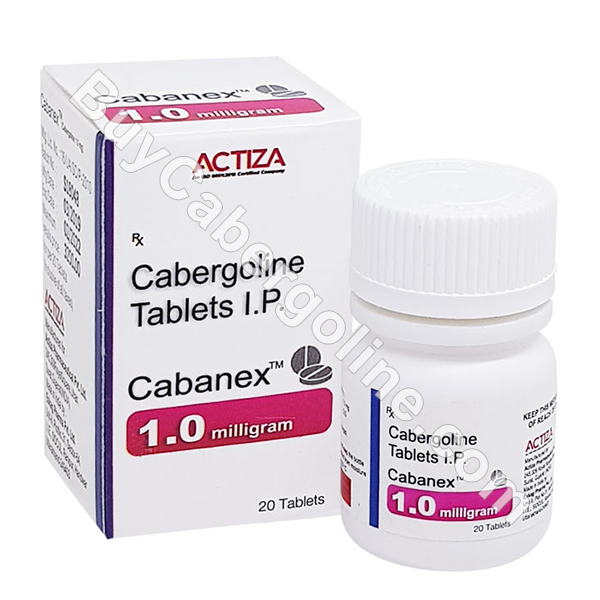
Cabanex 1 mg is a higher-strength brand tablet containing 1 mg of cabergoline, a prescription medicine that lowers the hormone prolactin. It is a dopamine agonist.
A 1 mg tablet is usually relevant once a person is already established on treatment, because cabergoline is normally started at a much lower dose and increased slowly. Availability of this strength varies by country.
This guide explains who a 1 mg strength may suit, how it fits with standard weekly dosing, the monitoring that goes with it, and the main safety points. For background on the condition most often treated, see the NIDDK's page on prolactinoma.
Who is a 1 mg tablet for?
Strength is not a quality rating, and a bigger tablet is not "stronger treatment" in itself. It simply holds more drug, so fewer tablets are needed for a given weekly dose.
| Weekly dose | Ways it can be made up |
|---|
| 0.5 mg a week | One 0.5 mg tablet |
| 1 mg a week | One 1 mg tablet, or two 0.5 mg tablets |
| 2 mg a week (labelled upper limit) | Two 1 mg tablets, or four 0.5 mg tablets |
Because dosing starts low, you would normally move to a 1 mg tablet only after your doctor has titrated up using smaller tablets such as Cabanex 0.5 mg. Never switch strengths on your own.
What cabergoline is used for
- High prolactin (hyperprolactinaemia), the main use. See cabergoline and prolactin.
- Prolactin-secreting pituitary tumours, where it lowers hormone output and often shrinks the tumour.
- Fertility problems in women and men when high prolactin is the cause.
- Preventing milk production in some countries, for example after a stillbirth or pregnancy loss, as directed by a doctor.
- Parkinson's disease, as a second-line option in some countries, usually with levodopa and under specialist care.
How it works
Cabergoline activates dopamine D2 receptors on prolactin-making cells in the pituitary. Dopamine's natural role is to restrain prolactin release, so mimicking it lowers prolactin. The effect lasts days, which is why dosing is weekly or twice weekly. See cabergoline and dopamine.
Dosage and monitoring
The prescriber sets the dose. These are typical label ranges.
- Starting dose: usually 0.25 mg twice a week, or 0.5 mg once a week.
- Titration: raised in steps no sooner than every four weeks, based on prolactin levels.
- Upper limit: about 1 mg twice a week.
- Heart check: doctors often arrange an assessment, sometimes with an echocardiogram, before starting and during longer or higher-dose treatment.
- Swallow whole with or without food. Do not crush or split a tablet unless your pharmacist says it is suitable.
Missed dose
Take it when you remember, unless your next dose is close. Never take two doses together.
Overdose
Call your doctor or poison control straight away. Fainting, severe dizziness, nasal congestion and hallucinations are possible signs.
More detail in our dosage guide and our page on Cabergoline 1 mg.
Side effects
Common
- Nausea, vomiting, heartburn or constipation
- Dizziness and tiredness
- Headache
- Breast pain or painful periods
- Tingling or burning in the hands and feet
Needs medical attention
- Breathlessness, persistent cough or chest pain
- Swollen feet or ankles
- Passing much less urine
- Blurred vision
- Hypersensitivity reactions such as rash or swelling
- Compulsive urges to gamble, spend, eat or seek sex
See common side effects and managing nausea.
Drug interactions
The clinically important interactions are:
- Dopamine blockers, such as haloperidol, chlorpromazine and metoclopramide.
- Macrolide antibiotics such as erythromycin and clarithromycin, and some azole antifungals and HIV medicines, which may raise levels.
- Other ergot medicines, such as bromocriptine, methylergometrine or dihydroergotamine.
- Blood pressure medicines, which may add to dizziness.
Always give your pharmacist a full list of your medicines and supplements.
Precautions
- Do not use if you are allergic to cabergoline or other ergot medicines, or with uncontrolled high blood pressure.
- Heart valve disease or fibrosis of the lungs, heart or abdomen is a reason to avoid it. See heart valve risk.
- Pregnancy-related hypertension (pre-eclampsia or eclampsia): do not use it to suppress milk.
- Liver disease: dosing may need to be lower.
- Pregnancy and breastfeeding: it can restore ovulation and it reduces milk, so discuss both with your doctor.
The full list is in who should avoid cabergoline.
Buying safely
Use a registered pharmacy and a valid prescription, and check the pack for the strength, batch number, expiry and manufacturer. Be cautious of unusually low prices and no-prescription offers. Our safe buying guide and generic cabergoline page explain more.
Frequently asked questions
Is Cabanex 1 mg stronger than 0.5 mg?
It contains twice as much cabergoline per tablet. What matters is the total weekly dose prescribed.
Can I start on 1 mg?
Treatment normally starts lower, so only your doctor can decide this.
Is it taken daily?
No. The usual schedule is once or twice a week.
How is it monitored?
With regular prolactin tests, scans if a tumour is involved, and heart checks for longer-term use.
This page is general information, not medical advice. Cabergoline is a prescription medicine and should be used only under the guidance of a qualified healthcare professional.



Leave A Review